
🌦 Introduction: Why Seam Technology Defines Performance
When the rain starts pouring or temperatures drop close to freezing, seam technology becomes the deciding factor between a reliable football and one that absorbs water, grows heavy, or loses shape.
Two major construction methods dominate modern football production — hand stitching and heat sealing. Each has its own strengths, but understanding how they perform under extreme weather conditions helps brands select the right model for their target market.
For consistent quality and FIFA-compliant waterproof performance, collaborating with professional Match Footballs Manufacturers ensures every ball undergoes rigorous water-uptake and low-temperature testing.
🧵 Hand-Stitched Footballs: Classic Craft with Controlled Flexibility
Hand stitching remains a hallmark of craftsmanship. Using polyester or Kevlar thread, panels are manually joined with around 1,500–2,000 stitches, resulting in a flexible seam that absorbs impact well.
Advantages:
-
Softer feel and responsive touch.
-
Easy maintenance and re-stitching.
-
Lower production cost for bulk or training models.
Drawbacks:
-
Slightly higher water absorption during prolonged exposure.
-
Threads can contract in cold weather, tightening the ball and affecting rebound.
These characteristics make hand-stitched models a great fit for training, promotional, or indoor play, where climate exposure is limited.
🔥 Heat-Sealed Footballs: Modern Precision and Waterproof Design
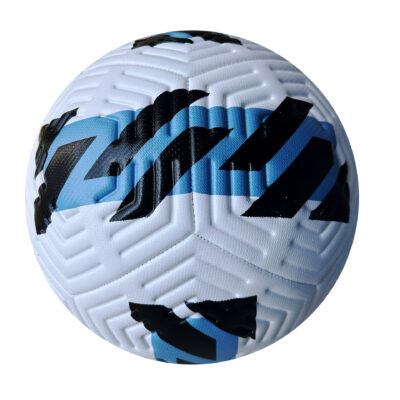
The heat-sealing process uses advanced lamination and bonding technology to fuse panels under controlled temperature and pressure. No thread is required, resulting in a completely sealed outer shell that minimizes water intake.
Advantages:
-
Superior water resistance (less than 10% weight gain after immersion test).
-
Consistent roundness, even in heavy rain or snow.
-
Improved aerodynamics with reduced seam drag.
-
Easier to clean and maintain glossy finish.
Drawbacks:
-
Slightly firmer touch due to seam rigidity.
-
Higher tooling and setup costs for manufacturers.
This makes heat-sealed footballs ideal for professional matches, winter leagues, and high-humidity regions where weatherproofing is critical.
💧 Water Uptake: Test Results That Matter
| Construction Type | Water Absorption | Weight Gain | Ideal Use |
|---|---|---|---|
| Hand-Stitched | 8–12% | Noticeable after 60 min | Dry climates, indoor use |
| Heat-Sealed | 2–5% | Minimal | Wet or cold outdoor play |
Modern factories perform FIFA Quality Pro water-uptake tests, submerging balls for 30 minutes under rotation to evaluate weight increase. Premium heat-sealed models consistently outperform stitched ones, retaining both feel and trajectory.
🧊 Low Temperature Resilience
In winter conditions (below 5°C), traditional stitched seams tend to harden slightly, reducing elasticity. The bonded TPU and PU shells used in heat-sealed footballs maintain flexibility even when frozen.
This gives them a significant edge for northern climates or year-round outdoor training, ensuring predictable bounce and spin despite cold or wet conditions.
For academies and sports retailers sourcing durable all-weather models, experienced Training Footballs Manufacturers offer scalable production and surface customization for different seasonal markets.
⚙️ Balancing Feel, Cost, and Durability
Choosing between hand-stitched and heat-sealed designs depends on your priorities:
-
For premium performance: Heat-sealed PU balls with thermo-bonded seams.
-
For affordability and flexibility: Hand-stitched TPU or hybrid models.
-
For hybrid strategies: Combine machine stitching with bonded overlays.
Many brands now blend both worlds — using hybrid technology that stitches inner layers but bonds the outer skin, achieving the feel of a hand-stitched ball with the resilience of a sealed one.
🏁 Conclusion
In today’s competitive football market, seam technology defines durability, control, and adaptability. While hand-stitched balls honor traditional craftsmanship, heat-sealed designs lead the way in waterproofing and cold-weather stability.
By understanding your target users — from youth academies to professional clubs — you can select the right combination of construction and materials to deliver consistent performance across all seasons.